 (Image source: Gemini)
 Buying a used car in 2026 is a completely different game than it was just a few years ago. We've seen a massive shift in how vehicles are priced and maintained. Last year, the average price for a three-year-old used vehicle hit $31,067. That is a lot of money to gamble on something that might have a hidden history of neglect. So what does this actually mean for you? It means the stakes are higher. With repair costs jumping 15 percent year-over-year, a single "oops" moment during the buying process can drain your bank account faster than a fuel leak. Have you ever felt that sinking feeling in your stomach when a dashboard light flickers on two days after you bought a car? It's a nightmare we want to avoid.
You need to approach this like a technical investigation rather than a simple shopping trip. The goal is to separate the shiny exterior from the mechanical reality underneath. Let's walk through how to protect your wallet and your sanity.
Setting Your Budget
Most people look at the number written in marker on the windshield and think that's what they need to save. It isn't. If you only budget for the sticker price, you're setting yourself up for a financial headache. You have to account for the "boring" stuff like sales tax, registration fees, and the inevitable jump in your insurance premium.
Think of it like buying a house. You wouldn't spend every last cent on the down payment and leave nothing for the light bill. A good rule of thumb is the 15 percent rule. You should keep 15 percent of your total car fund set aside specifically for immediate maintenance and unexpected repairs. Even a "perfect" used car usually needs something, like a fresh set of filters, a battery, or a fluid flush.
Then there's the trap of predatory financing. High-interest subprime loans are everywhere, and they're designed to keep you underwater on your loan for years. If the monthly payment looks "affordable" but the loan term is 84 months, you're not buying a car. You're buying a debt trap. Always get pre-approved by a credit union or bank before you even step onto a lot. It gives you the power to say no to the dealership's high-interest "special offers."
Pre-Purchase Inspection
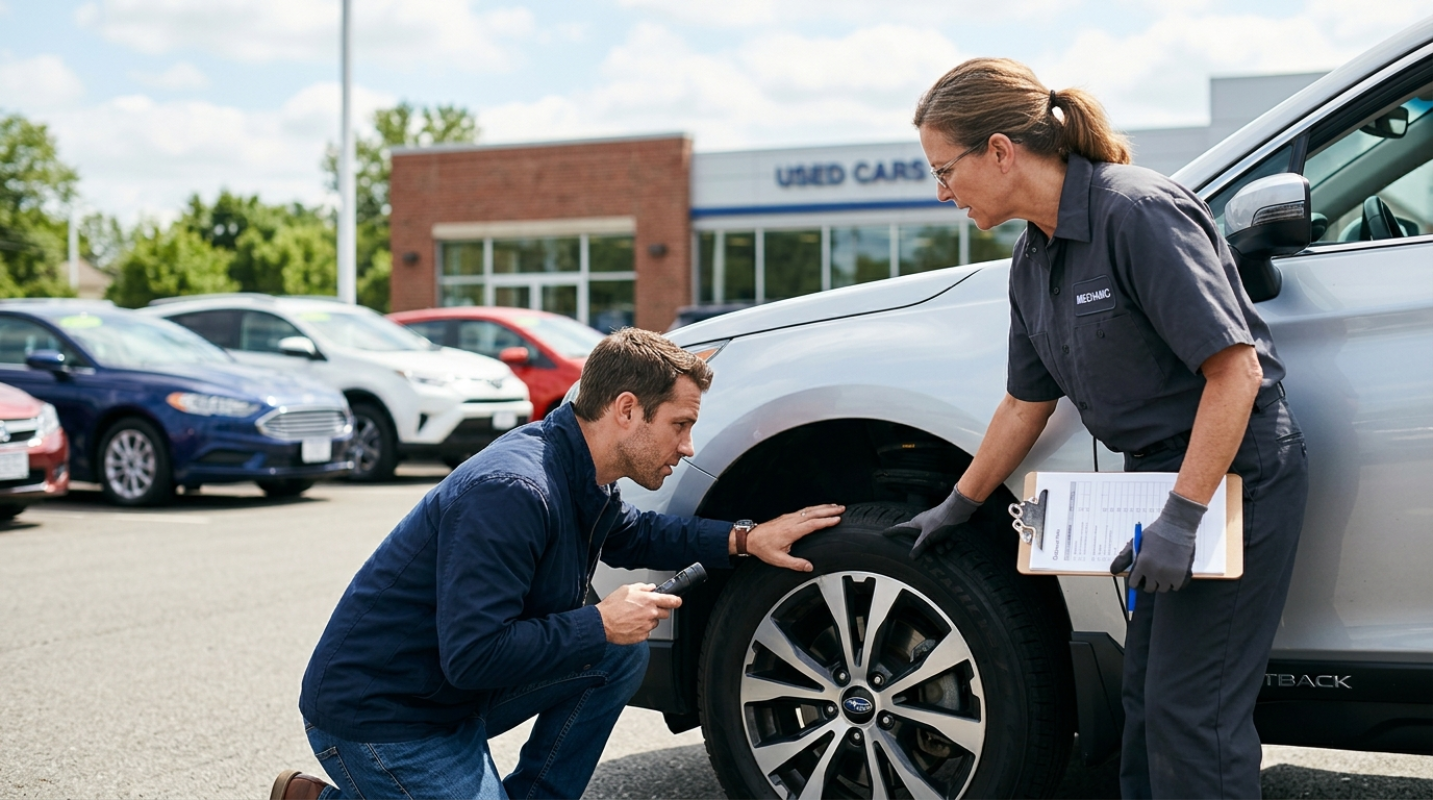
If there's one thing you should never skip, it's the professional pre-purchase inspection (PPI). Think of it like a background check for a potential employee. You wouldn't hire someone to manage your money without checking their references, right? So why would you spend $30,000 on a machine without having a pro look at it?
A professional mechanic's inspection is non-negotiable. It usually costs between $150 and $300, which might seem annoying to pay for a car you don't own yet. But consider the alternative. Last year, the average repair shop visit cost $838. Spending $200 to avoid a $5,000 engine replacement is the best investment you'll ever make.
A complete inspection covers things you can't see, like frame damage hidden under fresh paint or suspension components that are about to snap. If the mechanic finds an issue, don't just walk away. Use that report as a tool for price negotiation. If the car needs $1,000 in suspension work, that's $1,000 you should be knocking off the asking price. If the seller refuses to let you get an inspection, that's your cue to leave. Immediately.
Vehicle History Reports
You've probably heard of Carfax or AutoCheck. These reports are the digital equivalent of a car's medical records. They're great, but they aren't perfect. You have to know how to read between the lines. A "clean" report doesn't always mean a clean car. It just means nothing was reported to the insurance company.
Look for red flags like salvage titles, flood damage, or odometer rollbacks. Salvage or rebuilt titles mean the car was once declared a total loss. Although they're cheaper, they're incredibly hard to insure and even harder to resell later. Flood damage is a silent killer. It rots electronics from the inside out, and those problems might not show up for months.
What you really want to see is a long list of consistent service records. A car that was oil-changed every 5,000 miles at a reputable shop is a much better bet than a low-mileage car with zero history. Also, don't forget to check the NHTSA database using the 17-digit VIN. You'd be surprised how many cars are driving around with unresolved safety recalls for things like exploding airbags or failing brakes.
The Test Drive and Listening for Trouble
When you get behind the wheel, turn the radio off. I know, you want to hear the speakers, but right now you need to hear the engine. You're looking for a "cold start." This is when the engine hasn't been running for hours. If the seller already has the car warmed up when you arrive, they might be hiding a rough idle or a puff of smoke that only happens when the engine is cold.
Watch the exhaust. Blue smoke means the engine is burning oil. White smoke usually suggests a coolant leak, which could mean a blown head gasket. That's a repair that can easily top $2,000. During the drive, pay attention to how the car shifts. Shifting harshness or a "shudder" is a common complaint for used Ford and Nissan models.
If you're looking at an electric vehicle (EV), the test drive is more about the software and the battery. You want to see a State of Health (SoH) report above 80 percent.¹ If you notice the range "guess-o-meter" dropping 20 percent after you've only driven five miles, the battery cells are likely imbalanced or degraded.³ Also, check the charging speed. If it takes forever to charge at a fast charger, the internal resistance of the battery might be too high.²
Don't forget the safety tech. Modern cars are packed with Advanced Driver Assistance Systems (ADAS). If the car brakes suddenly when nothing is there, or if you see a "Check Forward Safety" light, the cameras might be misaligned. This often happens after a cheap windshield replacement and can cost $600 to recalibrate.⁴
Buying a used vehicle requires the right tools and resources to make sure you aren't getting a "lemon." The NHTSA estimates that 150,000 defective vehicles are sold to Americans every year. To stay on the right side of that statistic, you need to be diligent.
The Deal with Confidence
Once you've done the math, checked the history, and survived the test drive, it's time to talk paperwork. This is where a lot of people let their guard down because they're excited to finally be done. Don't do that. You need to verify the title yourself. Make sure the VIN on the title matches the VIN on the dashboard and the door jamb. If they don't match, walk away. It could be a stolen car or a "Frankenstein" build made from two different wrecks.
Check for liens. If the seller still owes money on the car, you need to make sure that the debt is cleared before the title is transferred to you. Otherwise, the bank can repossess the car even though you paid the seller for it. Always insist on a written bill of sale that includes the price, the date, and the "as-is" condition (or any warranties promised).
The most important tip I can give you is this: be ready to walk away. It's easy to get emotionally attached to a car that looks perfect in photos. But if the seller is being pushy, or if the mechanic finds a "small" oil leak that looks suspiciously like a big one, don't ignore your gut. There are millions of used cars out there. Don't let a high-pressure sales tactic force you into a bad financial decision.
Buying a used car is about managing risk. You can't eliminate it entirely, but by following these steps, you can make sure the odds are in your favor. Take your time, do the paperwork, and trust the data over the salesperson's promises.
This article on secondand is for informational and educational purposes only. Readers are encouraged to consult qualified professionals and verify details with official sources before making decisions. This content does not constitute professional advice.